Quick answer: A Christmas bingo game is a holiday version of bingo where cards show Christmas words or pictures instead of numbers. One person calls out words, players mark matching squares, and the first player to finish a row or full card shouts bingo and wins a small prize. It works for kids, family, and office parties at home.
What is a Christmas bingo game?
A Christmas bingo game is a holiday version of bingo where each card is filled with Christmas words, pictures, or a mix of both, instead of plain numbers. One person acts as the caller. That person picks words one at a time from a caller sheet or a hat. Every player checks their own card. If the called word is on the card, the player marks it. The first player to finish a full row, a column, a diagonal line, or another agreed pattern shouts bingo. Then the caller checks the card. If the marks are right, that player wins the round.
That is the whole game. No one needs to know rules from other card games. No one needs to be fast at maths. A child who can match a picture can play next to a grandparent who has played bingo for years, and both can win.
MerryHub makes printable Christmas games, cards and planners that families download and print at home.
This game fits a Christmas evening well. People are sitting together, food is nearby, and no one wants a long set of rules. Bingo gives everyone a shared job for a short round. You can pause between rounds, eat, talk, and start again.
For more ideas to print for the same evening, start with Christmas printables and Free Printable Christmas Games. For a different game later in the night, keep the online Christmas quiz in mind.
A good night is not about a fancy set. It is about clear cards, a calm caller, and prizes that make people smile.
How do you set up a Christmas bingo game at home?
Start with the room, not the cards. Put players where they can all hear the caller and see their card. A kitchen table works well, and so does a living room floor with cushions. If the room is noisy, pick a caller with a clear voice and keep side chats short during a round. People can chat freely between rounds.
Give each player one card for the first round. One card keeps the game calm. Later, keen players can take a second card. Do not hand out three or four at the start. That turns a relaxed game into a hunt, and younger players fall behind.
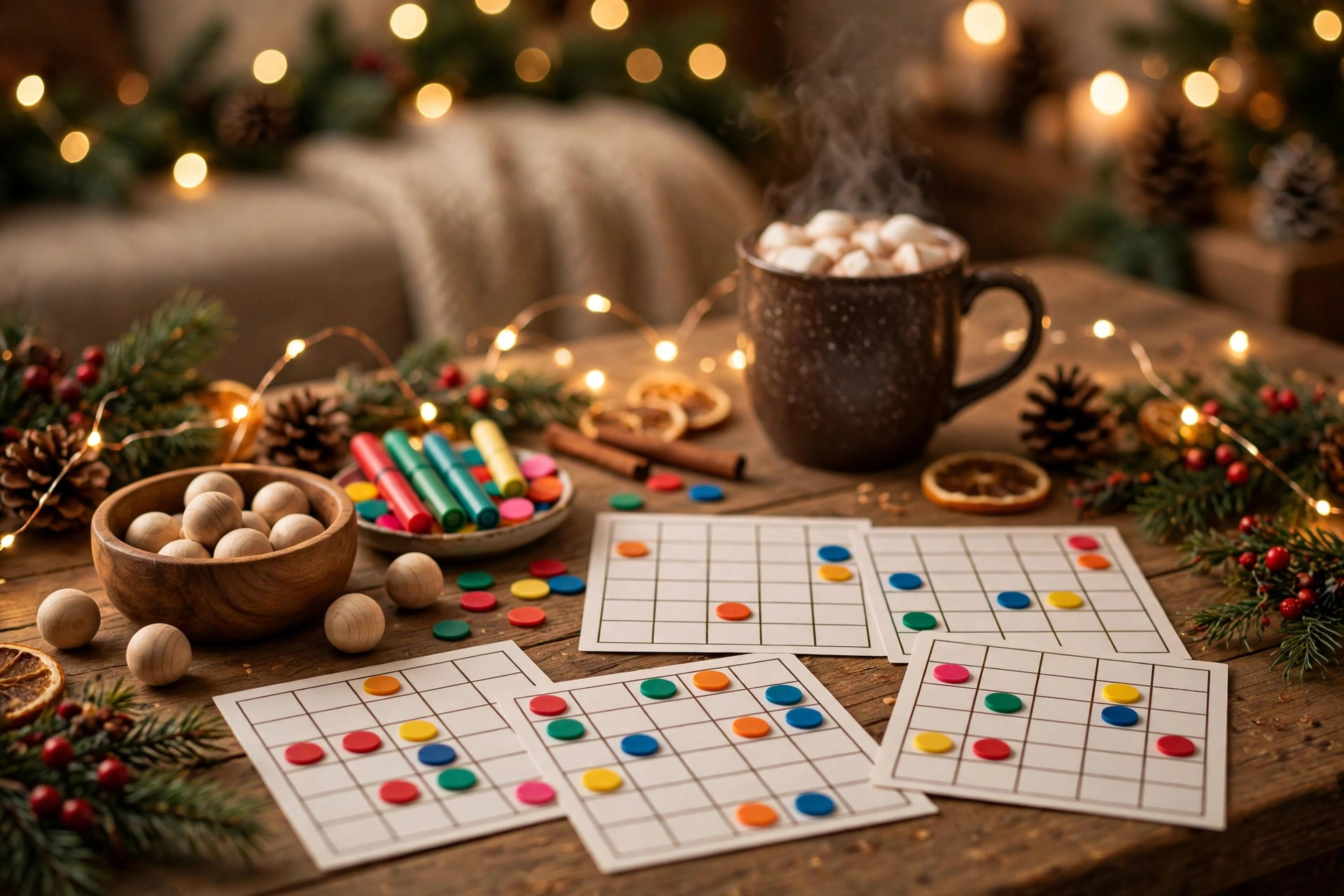
For markers, use small sweets, coins, buttons, or dried beans. Markers you can lift off are better than pencils, because the same card can be used again. If you use sweets, keep spares in a small bowl, because someone will eat one.
The caller needs a caller sheet or word slips. A caller sheet lists every word used, and the caller ticks each one off so no word is called twice. Slips in a bowl work the same way: pull one, read it, put it aside. A sheet is tidier. Slips feel more like a draw.
Before the first round, read the winning pattern out loud in plain words, such as "Tonight, a win is any full row across." Show it on a spare card if you can. This one step stops most arguments later.
Decide the prize before you start. A small sweet bag, first pick of dessert, or a silly paper crown is enough. Tell players what it is. A clear prize gives the round a small goal, even when the prize itself is tiny.
How do you play Christmas bingo, step by step?
Here is how to run a round from start to finish.
First, hand out one card and markers to each player. Check that everyone can read or recognise their card. Use picture cards for very young players and word cards for older kids and adults. If a player cannot read a word, pair them with a helper for the first round. No one should sit out just because reading is hard.
Second, the caller gets the sheet or slips ready, states the winning pattern in one short sentence, such as "First full row across wins," and asks, "Ready?" That pause tells everyone the game has started.
Third, the caller picks the first word, says it clearly, and says it again. Saying each word twice helps people who were looking down. Pause for a few seconds so players can mark it. Do not rush on. A calm pace is the heart of a good game, and pace is where most home games go wrong.
Fourth, players mark the word if it is on their card. If it is not there, they do nothing and wait. There is no penalty for a word that is not on your card. Just mark and wait.
Fifth, when a player finishes the pattern, they shout bingo clearly and lift their card. The caller stops, reads back the marked words, and checks them against the words already called. If all were called, that player wins. If one was marked by mistake, the game goes on and the player removes the wrong marker. Keep this check friendly. A wrong bingo is common. It is not cheating, just a slip.
Sixth, give out the prize, clear the markers, and take a short break. Then start the next round with a new pattern if you like.
Once everyone has played one round, the second round runs itself.
What words and pictures go on a Christmas bingo card?
A Christmas bingo card usually has a grid of squares. Each square holds one Christmas word or picture. Common words include tree, star, stocking, snowman, reindeer, Santa, gift, candy cane, bells, holly, wreath, fireplace, hot chocolate, snowflake, angel, and carol. Pictures work better than words for young children. Words work better for older children and adults, because they can hold more detail and more jokes.
For a family game, mix easy words with a few less common ones like mistletoe, nutcracker, or gingerbread house. Easy words keep young players in the game. Less common words give older players something to look for. Only hard words leave younger players waiting. Only obvious words end the round too fast.
For a kids-only game, use pictures only. A snowman or a candy cane picture is clear to a four-year-old. Keep the grid smaller for young kids, so a win comes sooner. A long wait is hard for a small child. A quick win keeps them keen for the next round.
For an adult game, add words tied to your own group. A family card might include burnt toast or late gifts, if those are jokes your family enjoys. An office card might include last email or party playlist. Personal words make the game feel made for your group. Keep the jokes kind. A joke that picks on one person will spoil the round for them.
For a mixed-age game, use cards that pair each word with a small picture. That way a child can match the picture while an adult reads the word, and both play the same card. This paired style is the safest choice when you are not sure who will play. It takes a little more work to make, but it saves you from handing out different cards and explaining different rules.
Check cards before the night starts for repeated words, words too close in meaning like gift and present on the same card, and spelling slips. A quick check now saves a mid-game argument later.
How is Christmas bingo different from regular bingo?
Regular bingo uses numbers. Christmas bingo uses words and pictures tied to Christmas. That one change changes the feel of the game. Numbers feel like a hall game. Christmas words feel like a party game. Players smile when they hear a word like snowman. They do not smile in the same way when they hear a number.
The rules stay close to the classic game: one caller, one card each, mark as you go, first full pattern wins. If you have played regular bingo before, you already know Christmas bingo.
The history of the game helps explain why it is so easy to pick up. You can read the history of bingo) for the full story of how a number game grew into the many versions people play today. The short version is that bingo has always been a simple matching game. Christmas bingo keeps that simple core and swaps in holiday words.
Another difference is pace. A home game should move slowly, so people who are chatting, eating, and watching kids can stay in it. A slow pace also lets the caller add a little fun, like pausing before a word everyone is waiting for. That pause is the moment people lean in.
Themed rounds keep the game fresh without new rules. Try one round on food words, then one on songs, then one on decorations. Players learn the pattern once and enjoy new words each time.
Christmas bingo is also easy to pause. If dinner is ready, pause after a round. If a baby needs attention, the caller can pause mid-round and pick up where they left off, as long as called words are marked on the caller sheet.
How do you call the numbers so everyone can keep up?
Calling slowly matters more than fancy prizes. That is a personal view, and it comes from watching home games go wrong. When a caller rushes, players miss words, cards get marked wrong, and someone feels cheated when a win is checked. When a caller goes slowly, everyone stays in the game, even the youngest player and the oldest grandparent. A slow caller is a kind caller.
Imagine a family bingo night where the grandparent calls. She reads some words in a silly Christmas voice. Santa words come out deep and jolly. Reindeer words come out fast and bouncy. The kids laugh, and the adults laugh too. A kitchen timer sits on the table and keeps each round to about 10 minutes. When it rings, the round ends, even if no one has won yet. The family checks who is closest, gives that player a small sweet, and starts a fresh round. No round drags on. The silly voices are not a distraction. They are the reason everyone listens for the next word.
You can copy that idea without the voices. Pick a steady rhythm: say the word, wait, say it again, wait, then move on. Watch the room. If people are still marking, wait. If everyone looks up, call the next word. A calm caller makes a calm room.
It also helps to add one short hint sometimes, such as "Tree. Christmas tree." That helps a child who knows the picture but is not sure of the word, and an adult who misheard. Keep the hint short.
For a large group, stand where everyone can see you and speak a little louder than normal chat, but do not shout. A helper at the far end can echo each word so no one misses it. If a player asks for a repeat, repeat it. A repeat costs a few seconds. A missed word can cost a player the round.
What is a ready-to-use calling script you can read out loud?
You do not need to buy anything to run a good game. You can read this script out loud, word for word, and it will carry you through a full round. Change the names and the prize to fit your group. Keep the pace slow.
Start the round like this. Say, "Welcome to Christmas bingo. Everyone has one card and some markers. Tonight, a win is any full row across. I will call one word at a time, and I will say each word twice. If the word is on your card, mark it. If you finish a full row, shout bingo and hold up your card. Are we ready?"
Wait for nods. Then say, "First word. Tree. Christmas tree. Mark it if you have it."
Pause. Look around the room. Then go on in the same way. "Next word. Stocking. A stocking by the fire. Mark it if you have it." "Next word. Snowman. A snowman in the garden. Mark it if you have it." "Next word. Candy cane. A red and white candy cane. Mark it if you have it."
Keep that pattern for every word: one word, one short hint, one pause. Do not add long stories between words. A long story breaks the flow and makes players forget to mark.
When someone shouts bingo, stop and say, "We have a bingo. Hold up your card, please. Let me check it with you." Read back each marked word in the winning row. If all were called, say the winner's name out loud and give the prize.
If the check fails, say it kindly: "That one was close. The word gift has not been called yet, so we keep playing. Take that marker off, and we go on." Then call the next word. No fuss. No blame.
End the round like this: "That is the end of this round. Clear your markers. Take a short break. We will start the next round in a few minutes with a new pattern." You can use this script for kids, family, and work friends. Only the prize and the pattern need to change.
How do you handle prizes without spending much?
A prize plan works best when it is decided before the game starts and shared out loud. A known prize gives each round a clear goal, even when the prize is small.
Here is a prize plan you can use without buying anything new. These prizes cost nothing, but they feel real because they give the winner a small choice the group honours.
If you buy small prizes, keep them simple: sweets, a single chocolate, stickers for kids, or a small candle for adults. Wrap each prize in plain paper if you like. A wrapped prize feels bigger than the same item unwrapped. Keep prizes roughly equal, or players lose interest in the smaller round.
For kids, avoid prizes that cause a row. Do not give one child a large toy while others get nothing. Give small prizes to round winners, and a tiny sweet or sticker to every child at the end, win or lose. That keeps the night kind.
For an office party, keep prizes light and work-safe: a free tea or coffee, first pick of snacks, or a fun desk item. Avoid prizes that single someone out or force a forfeit. A prize should feel like a win, not a dare.
If you run many rounds, keep a simple tally on paper. At the end, the person with the most wins can pick a small extra treat, like choosing the group photo pose.
- First round: first pick of dessert.
- Second round: picking the next song or film.
- Third round: a paper crown or a silly badge made from card.
- Final blackout round: picking the next game the group plays.
How do you change the game for kids, big groups, and office parties?
Kids need short rounds and clear pictures. Use picture cards, one card each, and a pattern that comes quickly, like any full row. Call slowly and repeat each word. Let a parent or older sibling sit with a very young child for the first round. After that, most kids can play alone. If a child shouts bingo by mistake, smile, fix the marker, and carry on. The game should feel safe to get wrong.
For mixed ages, pair words with pictures on the same card. That lets a five-year-old and a fifty-year-old play the same game. Seat younger players near the caller.
For a big family group, split into teams if the room is crowded. Each team shares one or two cards and marks them together. Team play keeps a large room calm, and lets shy players join in without being the centre of attention.
For an office party, keep rounds short and the tone light. Use office-friendly words and gentle jokes about work life at Christmas, like last email or party playlist. Keep the caller neutral and brisk, but not rushed. Avoid personal jokes. If some colleagues do not celebrate Christmas, keep words about winter, food, and general holiday fun. A welcoming list matters more than a clever one.
If you want ideas for the other December nights, when bingo is over but the family still wants something to do, look at Christmas countdown activities for kids. That page answers the next question many parents ask after a game night, which is what to do tomorrow night and the night after that. It is a useful bridge from one evening of play to a whole week of small activities.
For a longer evening, mix bingo with one other short game. Bingo, a break, and a different game feels like a party. Three bingo rounds in a row can feel long.
What do you do when two people win, or when a round feels flat?
Two people shouting bingo at the same time is common, and it is easy to handle if you decide the rule before the game starts. The simplest fair rule is this: if two cards are both correct, both players win and both get a prize. Split the prize if you only have one, or give each winner the same small prize. Do not make them play a tie-break unless both want one. A tie-break can be fun for adults, but it can upset a child who thought they had already won.
If one card is correct and the other is not, say so kindly and clearly. Say, "One card checks out, so we have one winner this time. The other card was close. We will keep playing for the next round." Then move on at once. Do not dwell on the wrong card. The faster you move on, the less awkward it feels.
If a round feels flat, change one thing, not everything. Try a new pattern, a new caller, or a new prize. Four corners means the four corner squares must all be marked. A full frame means the whole outer edge must be marked. A blackout means every square must be marked. Save blackout for the last round, when people are settled and happy to play longer.
If players lose interest, check the pace first. Are you calling too fast? Are rounds too long? Is the room too noisy? Fix the pace before you blame the game. A short break often helps more than a new rule.
If one player keeps winning, let the winner become the caller for the next round, or swap cards between rounds, so no one keeps a lucky card all night.
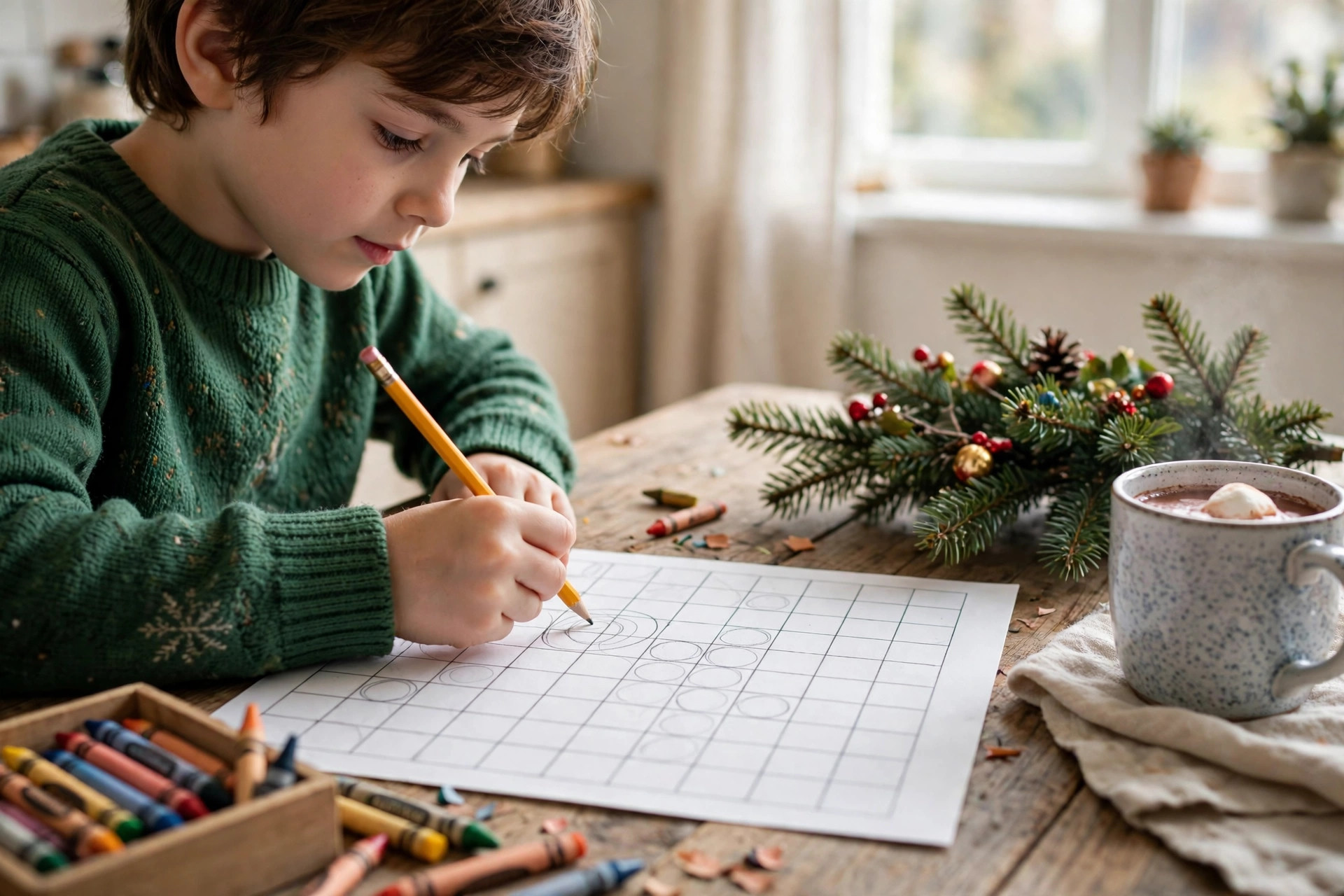
If you have no printer, you can still play. Draw a grid on paper by hand and write Christmas words in each square. Shuffle the word order on each card so cards are not identical, and use a word list on a separate sheet as your caller sheet. Hand-drawn cards work just as well as printed cards, and kids often enjoy helping to draw them. Or play a spoken version where players write a list of words and cross them off as they are called. The rules stay the same.
Where do printable bundles fit in, and what should you play next?
Once you know how to run the game, a printable set saves you the work of making cards by hand. You already have the method, the calling script, and the prize plan above. A bundle simply gives you ready cards and a caller sheet, so you can start faster.
The Christmas Games Bundle ($4) on Christmas printables is one option to look at. The Christmas Games Bundle has 15 printable party games across 25 pages. That means bingo is one game among others you can use across the season. The Complete Christmas Bundle ($7) on Christmas printables is the larger option. The Complete Christmas Bundle's games section includes 10 bingo cards with a caller sheet. For a bigger group, ready cards save you from drawing each one by hand.
You do not need either bundle to play tonight. The script and prize plan in this guide work with hand-drawn cards too. Buy a bundle only if it saves you time you would rather spend with your guests.
If you want to keep the evening going after bingo, play the online Christmas quiz next. It is a different kind of game, so people tired of marking cards get a fresh challenge, and people who did not win at bingo get a new chance to shine.
That is your next step, by name: the online Christmas quiz at /christmas-quiz. Go there when bingo ends.