Quick answer: An elf arrival letter is a short note your elf leaves on arrival morning, usually between late November and 1 December, saying hello, sharing its name, and setting one simple rule. Copy a ready letter below, add your child's and elf's names, print it, and leave it beside the elf. It takes about five minutes.
Why the arrival letter matters so much
The elf's arrival is the one morning children remember. After weeks of hearing about Christmas coming, they wake up, run downstairs, and there it is: a small elf, sitting somewhere new, with a letter just for them. The letter is what turns a doll on a shelf into a guest who has travelled a long way to visit.
Without a letter, parents often find themselves making up an explanation on the spot, half asleep, while children ask ten questions at once. With a letter, the answers are already written down: where the elf came from, what its name is, what it will do each night, and the one rule that keeps the magic safe. You read it together once, and the tradition runs itself from there.
The letter also sets the tone for the whole season. A warm, funny letter tells children this will be fun. A letter with a clear, kind rule about not touching the elf saves you from the daily worry that a hug will end the magic. And a letter that mentions something personal — a child's new hobby, a good deed from the week — makes the whole thing feel real in a way no shop-bought decoration ever could.
First arrival: the letter for a brand-new elf
Use this version the very first year your elf arrives. It introduces the elf, explains the nightly visits, and sets the no-touching rule gently. Replace the names in brackets before you print.
Read it aloud together on the first morning, slowly, like a real letter. Children love hearing their own name in it. If your child is learning to read, let them read the short lines and help them with the long ones — the letter becomes a keepsake, not just a note.
- "Hello! My name is [elf name], and I have travelled all the way from the North Pole just to spend Christmas with you. Santa asked me to watch over your home, and every night while you sleep, I will fly back to tell him about your day. When morning comes, look for me somewhere new — I love a good hiding spot! There is just one important rule: please do not touch me, or my magic might fade away. I cannot wait for all our adventures together. Love, [elf name]"
Welcome back: the letter for a returning elf
Returning elves need a different letter. Children remember last year, so the letter should remember it too. Mention one thing from last Christmas — the elf's favourite hiding spot, a funny moment, or how much your child has grown.
If your elf arrives with a small treat — a candy cane, a tiny wrapped chocolate, a new pencil — mention it in the letter. A line like "I brought you a little something" makes the arrival feel like a celebration rather than just another morning.
- "Guess who's back! It's me, [elf name]! I missed you so much, and Santa told me all about how you have grown this year. I have been practising my best hiding spots all summer, so keep your eyes open every morning. Remember our rule: look, laugh, but please don't touch, so my magic stays strong. I have some wonderful surprises planned. Let the fun begin! Love, [elf name]"
The late-arrival rescue letter
Sometimes life gets in the way. The elf is still in a box on 3 December, or a parent forgets until the second week. Do not panic, and do not pretend the elf was there all along. Children notice, and a cover story is harder to keep than the truth dressed up nicely.
A late arrival can even become a family joke. The elf "apologises" for being stuck in traffic, or for falling asleep in a snowdrift. The letter turns a parent's slip into part of the story, and children usually love the apology version just as much as the on-time one.
- "Sorry I'm a little late! The North Pole was so busy getting ready for Christmas that my sleigh was delayed. But I am here now, and I plan to make up for lost time with extra mischief and extra fun. Keep an eye out every morning — I might be somewhere very silly. Love, [elf name]"
What every good arrival letter includes
You do not need a long letter. In fact, short letters work better, because children want to find the elf, not sit through a speech. Every good arrival letter has five small parts, and you can check yours against this list before you print.
Keep the letter to about ten lines. If it runs longer, children stop listening halfway through, and the best line at the end never lands.
- A greeting with the child's name. One line, personal, warm. This is what makes it feel real.
- The elf's name. If you have not chosen one yet, MerryHub's Elf Name Generator on the site gives you ideas in seconds — pick one together as a family.
- Where the elf came from. One line about the North Pole is enough. No long backstory needed.
- What happens each night. "I fly back to Santa while you sleep, and I find a new spot by morning." That single sentence answers most questions.
- One clear rule. The no-touching rule, said kindly: touching makes the magic fade, so looking is the game.
Arrival night: the five-minute setup
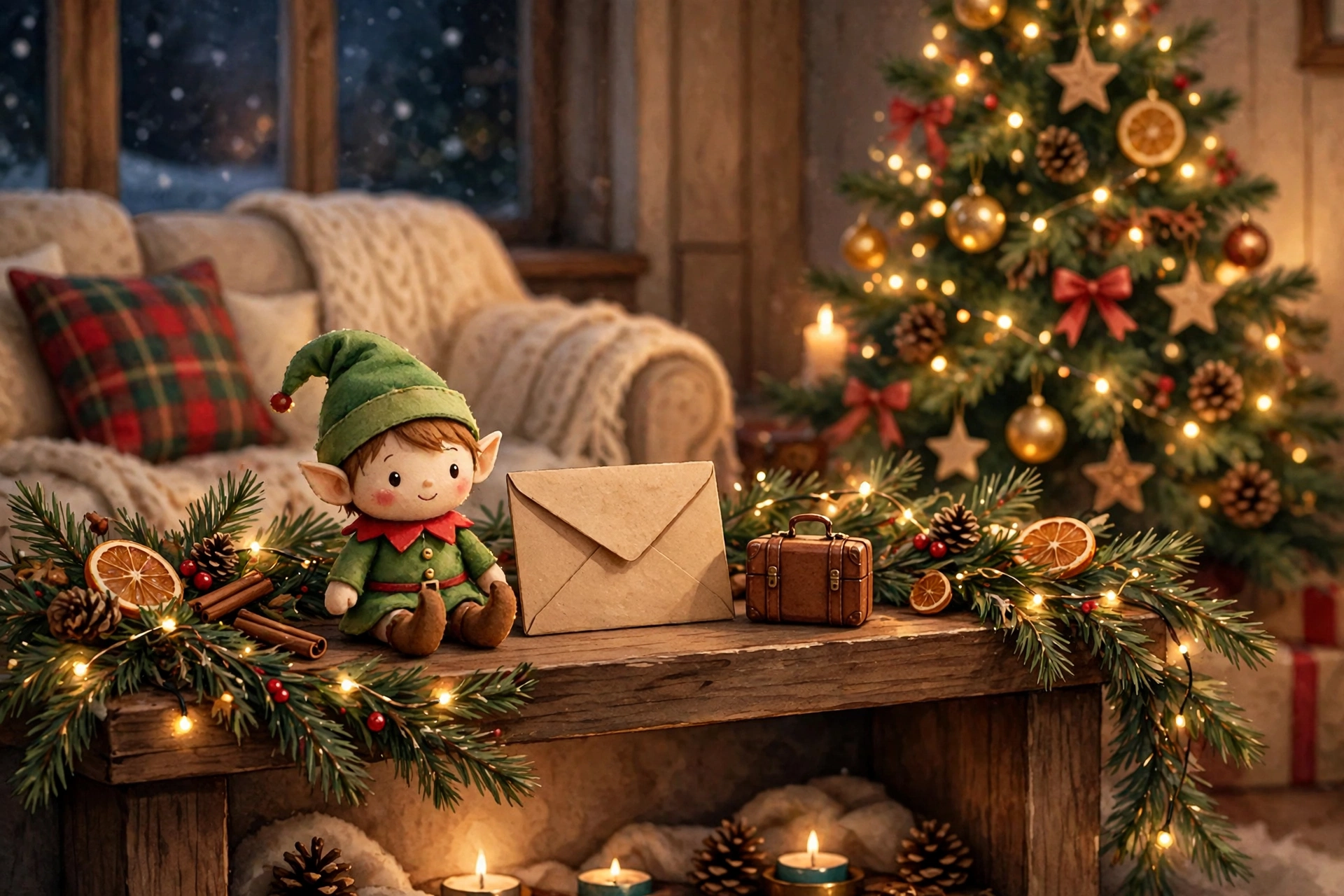
The letter does the talking, but the scene does the magic. You do not need an elaborate display. In fact, the simplest arrivals are often the best, because the letter is the star. Here is a setup that takes five minutes the night before.
If you have more than one child, one letter can speak to all of them by name. If you have more than one elf, give each elf its own short letter, or one joint letter signed by both. Keep it simple either way — the children care about the names, not the paperwork.
- Pick a spot children will check first. The breakfast table, the top of the stockings, or beside the advent calendar all work. Avoid high shelves children cannot reach with their eyes.
- Prop the letter where it can be seen. Lean it against the elf, or tuck it under the elf's arm. Folded flat under a plate, it gets missed.
- Add one tiny prop. A miniature suitcase, a candy cane, a dusting of flour "snow" footprints, or a tiny scarf. One prop beats ten.
- Leave a pencil or a reply note. Some children love writing back. A blank mini-note beside the elf invites a reply without you having to plan anything.
- Set a phone reminder for the first week. The hardest nights are the first three, before moving the elf becomes a habit. A 9 pm reminder saves the midnight panic.
The no-touching rule, explained kindly
Almost every family uses the no-touching rule, and almost every parent dreads the moment a small hand reaches out. The letter is the best place to set it, because the elf says it, not you. Children accept rules from the elf far more easily than rules from a parent at 7 am.
Keep the wording gentle and positive. "Please look with your eyes and not your hands, so my magic stays strong" works better than any warning. Avoid scary consequences. The magic "fading" is enough — children understand it, and it gives you a kind answer if touching does happen: the elf rests for a day and comes back, because magic needs rest too.
Some families add a special exception, and that is fine if it is your tradition: a child may hold the elf on Christmas Eve, or on the elf's birthday. If you add an exception, write it in the arrival letter so it is the elf's rule, not a negotiation later.
Arrival wording by age: what to change for each child
The letters above suit most children aged four to seven. Younger and older children need the same letter trimmed or sharpened, not a different story. The arrival, the elf's name and the one kind rule stay the same at every age. What changes is the length, the words, and how much knowing humour you let in.
If your children span several ages, write the main letter for the middle child and add one handwritten line at the bottom for each of the others — a small drawing for the toddler, a hiding-spot challenge for the oldest. One letter, three readers, nobody left out. And if this December also brings a new baby to the house, give the elf one line about it: "Santa told me there is a new baby to watch over this year. Lucky me." An older sibling who hears the elf welcome the baby often welcomes the baby a little more easily too.
- For a toddler (age two or three): keep it to three short lines they can hear in one breath. "Hello, [child's name]! I am [elf name], your elf. I have come from the North Pole to play hide and seek. Look for me every morning!" Draw a small star or heart beside the elf's name, read the letter twice, and let them carry it around. At this age the paper itself is the treasure.
- For an early reader (age five or six): use short sentences and words they can sound out, then leave one word for them to read alone — their own name works best. "Dear [child's name], I am back from the North Pole! My name is [elf name]. Every night I fly to see Santa. Every morning I hide. Can you find me? Please look, but do not touch, so my magic stays strong. Love, [elf name]"
- For an older child (age eight and up): add a wink that respects how much they have grown. "You are taller than last year, so I have upgraded my hiding spots. Fair warning: the easy ones are gone." Older children stay in the game when the letter treats them as a worthy opponent at hide and seek, not as a baby who must be fooled.
When two elves arrive on the same morning
Some houses wake up to two elves: one for each child, a pair who arrive as partners, or a second elf joining a year or two after the first. Two elves need one joint letter, not two competing ones, or the first morning turns into an argument about whose letter is better and whose elf has the better name.
Give each elf one different job in the letter — one reports to Santa each night, the other thinks up the hiding spots — so children can tell their stories apart from day one. After arrival morning, the pair can share the nightly work between them: our Elf on the Shelf Notes Printable guide has short messages that read just as well signed by two elves as by one.
- "Hello, [children's names]! We are [elf name] and [elf name], and we have travelled all the way from the North Pole together. Two elves means double the hiding spots and double the mischief. There is one rule for both of us: please look with your eyes, not your hands, so both our magics stay strong. Let the finding begin! Love, [elf name] and [elf name]"
Arrival morning checklist for grown-ups
The letter is written, but arrival morning itself runs better with a tiny bit of stage management. Five small things, all done the night before, prevent the classic arrival-day wobbles. If you are printing the letter from our printables collection, print two copies while you are there — one to leave out, and one spare for the morning juice gets spilled on the original.
- Stage everything before bed: elf, letter and one prop in place the night before, not in a bleary 6 am scramble while small feet are already on the stairs.
- Decide who reads the letter. If mornings are rushed, let the finding happen first and read the letter together slowly at breakfast, when everyone can actually listen.
- Photograph the scene before the children come down. In three weeks, when someone asks where the elf hid on the very first day, you will be glad you did.
- Keep the elf's name written down on your phone. Parents forget names under pressure. Children never do, and they will still be testing you on it in February.
- Put the letter somewhere safe straight after breakfast, not back in a kitchen drawer. Arrival and goodbye letters become a pair of keepsakes, and the full season, including the farewell, is set out in our Elf on the Shelf Kit guide.
Pair it with the rest of the season
An arrival letter works best as the first page of a longer story. The same elf that arrives with a letter can leave short notes on other nights — a joke, a kindness challenge, a countdown message — and can say goodbye with a matching letter on Christmas Eve. MerryHub's printable pack includes a full elf kit with daily notes and a goodbye letter in the same spirit, so the season has a beginning, a middle and an end that all feel like they belong together.
If you are planning the whole month, the easy elf ideas guide on this blog gives you simple nightly setups sorted by effort, so the arrival letter is not followed by three weeks of blank evenings. Start with the letter, then pick one idea a night, and the tradition mostly runs itself.
Love these? The printable Elf Notes & Letters Pack ($3) has the arrival letter, goodbye letter, 24 daily notes and the official report card — and the Elf + Advent Bundle ($4) adds 25 Advent activity cards. See them on our Printables page.
If arrival morning is tomorrow and you only do one more thing tonight, make it this: read our Elf on the Shelf Arrival Ideas guide and pick the simplest first hiding spot in it, so the letter has a scene worthy of it waiting in the morning.
Try it on MerryHub
- See the printable cards & games pack
- Try the Elf Name Generator
- Easy Elf on the Shelf Ideas
- Elf on the Shelf Notes Printable