Quick answer: Choose colouring pages by the size of their spaces, not by the picture. Toddlers need big, bold outlines they cannot easily go outside; five to seven year olds enjoy simple scenes with medium spaces; eight to ten year olds can handle detailed pictures. Print one page first, check the line thickness, and only then print a whole set.
Why the spaces matter more than the picture
There are thousands of free colouring pages online, and that is exactly the problem. A parent searching at 4pm on a rainy Saturday does not need a thousand pages. They need five pages that will actually keep their child busy, at the right level, without a meltdown over lines too thin to colour inside. I have watched both versions happen: a four-year-old handed a detailed unicorn scene, crayon everywhere except inside the lines, in tears within three minutes; and the same child handed a big bold fish, happily colouring for twenty minutes. The picture mattered less than the spaces in it. If you want a ready-made set rather than hunting page by page, the Kids Coloring & Activity Pack holds 200 colouring pages plus learning and activity pages in one file, sorted into two levels. The rest of this guide helps you choose well whether you use that pack or single pages — and the printable bundles page lists the other packs if colouring is only one part of the day you are planning. MerryHub makes printable games, cards and planners for parties and family events that families download and print at home.
What a printable colouring page is
A printable colouring page is a black-and-white outline picture, printed at home, that a child colours in with crayons, pencils or markers. That simple definition hides the important choice: the thickness of the lines and the size of the spaces decide who the page is for. A page with thin lines and tiny spaces is not a harder version of a page with thick lines and big spaces. It is a different activity, for a different child, and handing a child the wrong one is the fastest way to end colouring time early.
Choosing by age, honestly
Age labels on colouring pages are rough, but they point in the right direction. Use them as a starting point, then watch your child for one page and adjust.
My own rule, learned the hard way: if your child finishes a page in under two minutes and asks for another one immediately, the pages are too easy. If they abandon a page halfway through, the pages are too hard. The right level keeps them going for about ten to fifteen minutes without help.
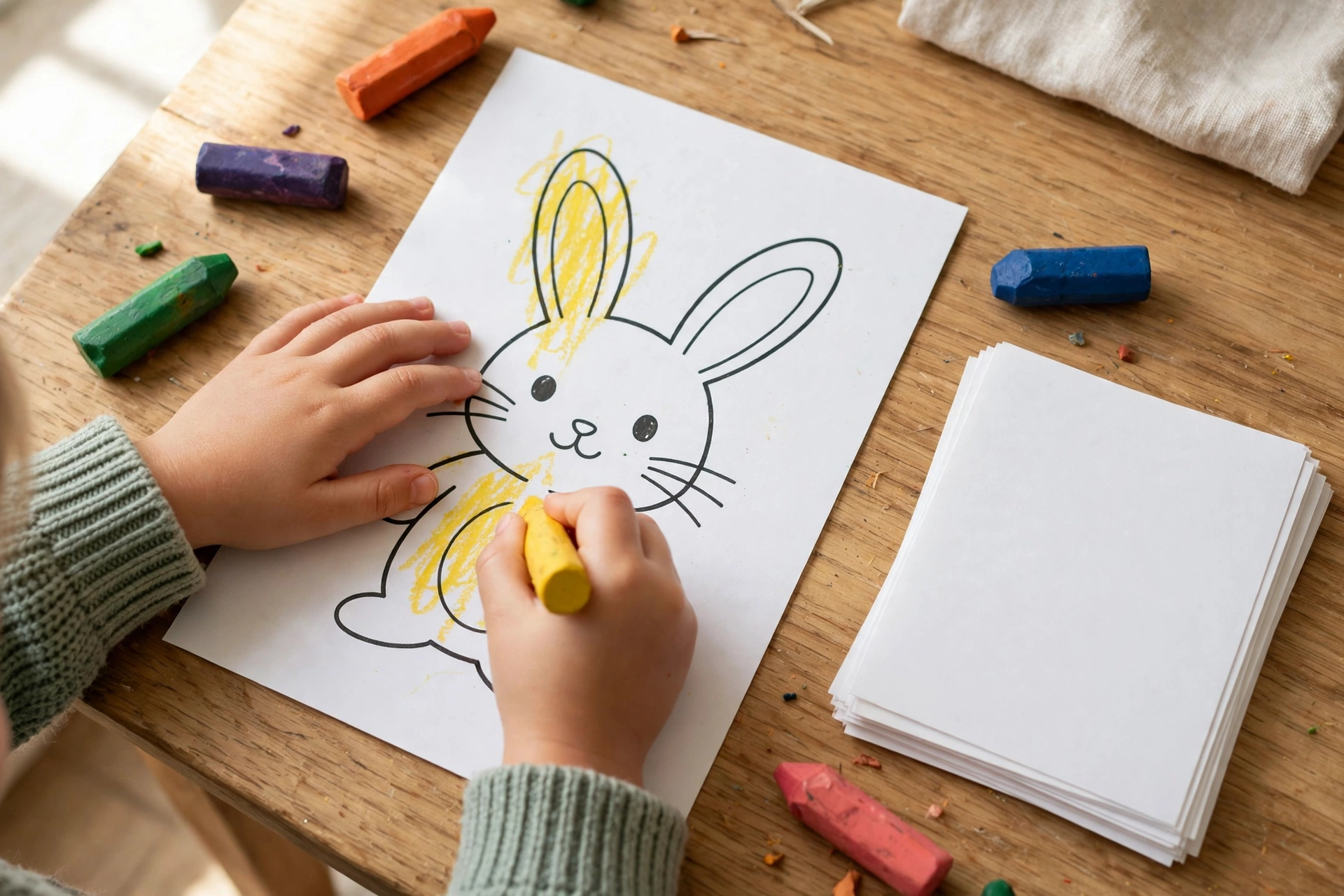
- Ages 3 to 4: big, bold outlines, one main shape per page, almost no background detail. Think a single fish, a single apple, a single car. The child is learning that crayons make marks inside shapes, and that is enough.
- Ages 5 to 7: simple scenes with medium spaces — an animal with a tree behind it, a house with a garden. These children can stay inside medium lines most of the time, and they love pages where they can add their own details, like a sun or a flower, in the empty corners.
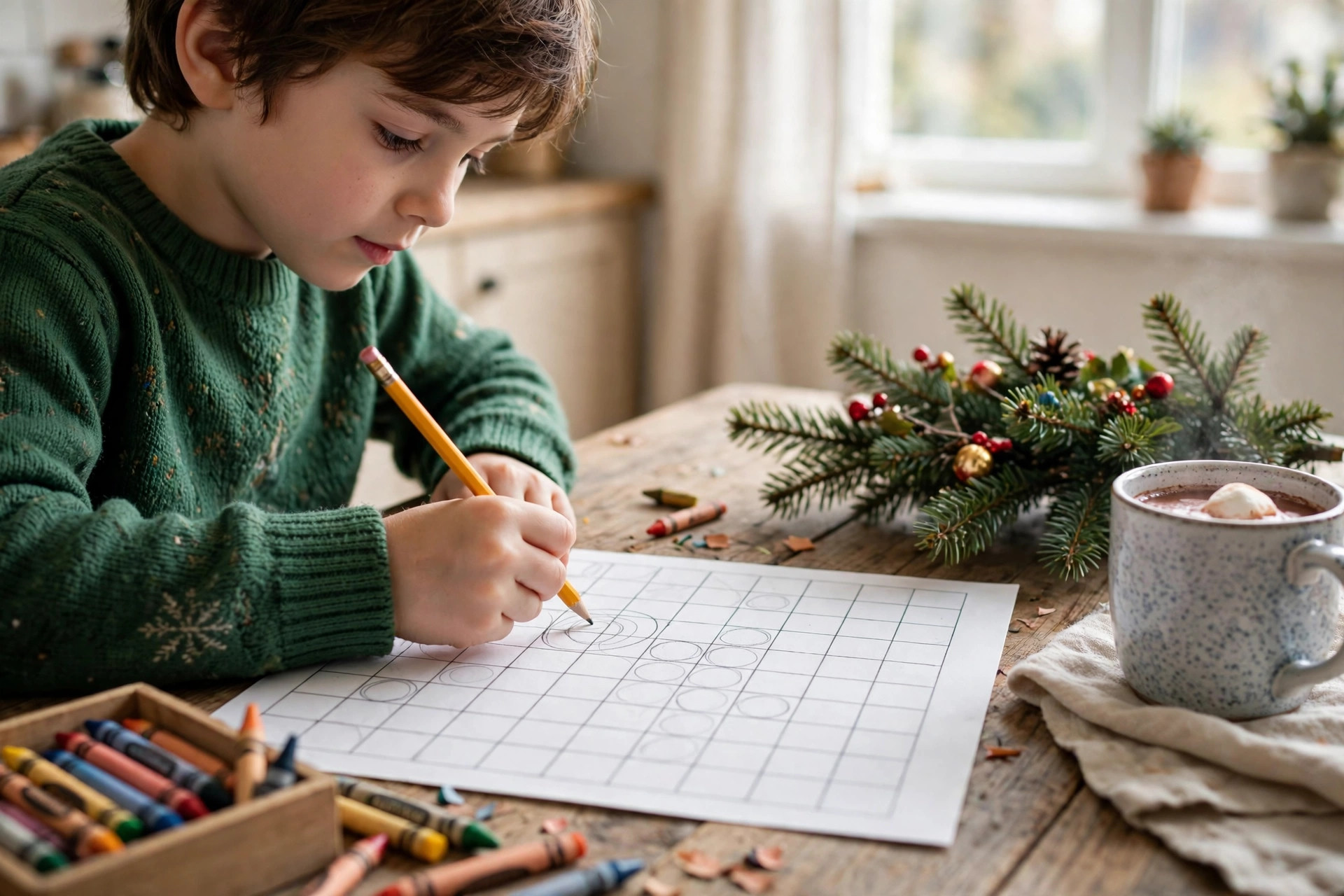
- Ages 8 to 10: detailed scenes, patterns, and pages with a job attached — colour by number, a maze on the same page, a spot-the-difference. These children get bored by big empty spaces. They want something to work out, not just fill in.
Crayons, pencils and the grip question
The tool matters as much as the page, especially for younger children. Short, chunky crayons are easier to hold than long thin ones, and they break less often, which matters more than you would think at 4pm on a rainy day. Washable markers are fun for older children, but they bleed through thin paper — print on slightly heavier paper if markers are involved, or put a scrap sheet underneath. There is a real developmental reason behind all this, not just tidiness. Sheffield Children's NHS notes that hand preference generally develops gradually from 2 to 4 years of age and is apparent in tasks such as colouring, and that children with a weak grip perform better using short, fat crayons and markers, because those support the open space between the thumb and index fingers. You can read their full guidance in the Sheffield Children's NHS guide to fine motor skills. The practical point for parents is simple: do not correct a young child's grip constantly during colouring. Let them colour, let them enjoy it, and the grip will follow the practice. One more practical tip: give a child five crayons, not fifty. A whole box on the table becomes a sorting game, not a colouring game. Five colours, chosen by the child, and the page gets finished.
A colouring routine that actually calms a day down
Colouring works best as a small ritual, not as a desperate distraction. Here is a routine that has worked in our house and in classrooms I have borrowed it from.
If colouring is for a party or a classroom, print a few extra pages and let children swap. Swapping is social, and it stops the "I wanted that one" argument before it starts. The free printable birthday games guide uses the same swap idea for party games, and it works just as well here.
- Pick the page together, the night before if you can. Choosing is half the fun, and it stops the morning argument.
- Print two copies of the same page. One for the child, one for you, or one spare for the inevitable "I did it wrong" moment. A spare copy turns a disaster into a fresh start.
- Set a timer for fifteen minutes, not an hour. Fifteen minutes of colouring, then a break, beats an hour that ends in tears.
- Display the finished page. Fridge, wall, bedroom door — anywhere it will be seen. A child who sees yesterday's page displayed will ask for today's page without being told.
Beyond colouring: the pages that keep older children going
A child of eight or nine will eventually get bored of colouring alone, however good the pictures are. That is not a failure of colouring; it is a sign they are ready for pages with a second job. Mazes, dot-to-dots, word searches, colour-by-number and spot-the-difference pages all use the same printing routine, but they add a puzzle to solve. The Kids Coloring & Activity Pack pairs its 200 colouring pages with 44 learning pages and 48 activity pages — mazes, dot-to-dots, word searches, colour-by-number and more — plus answer keys, precisely because a pack that only colours runs out of steam with older children. If you are printing single pages, mix one puzzle page in for every three colouring pages, and watch which pile empties first. That tells you what your child actually wants next time.
Printing without wasting paper and ink
Colouring pages are black-and-white by design, which already saves ink, but a few settings help further.
- Print in greyscale or black-and-white mode, even if the preview looks grey. Colour mode wastes ink on lines that are meant to be black.
- Print one page first and check the line thickness. Lines that look fine on screen can print too faint on some printers, and faint lines are the ones children colour straight over.
- Use the "2 pages per sheet" setting for small pages for toddlers, if your printer offers it. Two small pages on one sheet is plenty for a first colouring session, and it halves the paper.
- Keep a folder — physical or digital — of the pages your child liked. Next rainy day, you are not searching again. You are printing from a folder you already trust.
What to do next
If colouring is sorted, the next question is usually what else goes in the activity folder for the same child. The ready-made answer is the pack itself: 200 colouring pages, learning pages and activity pages in one file, for ages 4 to 10, in two levels. Your next page is the Kids Coloring & Activity Pack.
Colouring pages by theme: matching the picture to the child
The picture matters after all, just not in the way most people think. It matters because a child who loves dinosaurs will colour a dinosaur for twenty minutes and abandon a flower in two, even when the spaces are exactly the same size. The trick is to match the theme to the child, not to the season or to whatever is on the first page of search results. Ask what they are interested in this month. It changes fast at this age, and the answer is usually one word: trains, dogs, space, mermaids, football.
Themes are also a quiet way to teach. A page of a farm animal can start a conversation about where milk comes from. A page of a rocket can lead to counting the stars drawn around it. Seasonal themes work well too, but only when the child is living in that season: pumpkins in October, snowmen in December, flowers in spring. A Christmas page in March feels wrong to a child, and they will tell you so.
Keep a short list of the themes that worked, on the front of the folder where you keep the pages. Next time you print, start from that list instead of starting from scratch.
Colouring as quiet time: screen-free afternoons, travel and waiting rooms
Colouring earns its place in a family because it fills the gaps that screens usually fill, without the noise and the arguments that come with them.
For travel, print the pages the night before and put them in a flat folder with a few crayons in a zip bag, not a whole box. A whole box rattles, spills and becomes a game of its own. Five crayons and three pages are enough for most journeys. For waiting rooms, pick pages with big spaces and thick lines, because the child will be colouring on their lap or on a chair arm, not at a table.
At home, colouring works best as a regular quiet slot rather than a reward or a punishment. The same time each day, even ten minutes, turns it into something the child expects and asks for. Put the folder where the child can reach it themselves, and let them choose the page.
Helping a child who says "I can't colour"
Sooner or later, most children say they cannot colour, and they usually mean one of three things. The first is that they went outside the lines and they think that means they failed. The second is that someone else's page looked better than theirs. The third is that the page was too hard for them, which is a printing choice, not a child problem. All three have the same fix: colour next to them, badly, and happily.
Sit down with your own page and colour outside the lines on purpose. Use the wrong colour for the sky. Laugh about it. A child who sees an adult enjoying a messy page learns that colouring is not a test. If they are comparing their page with a sibling's, give them different pictures so there is nothing to compare. If the page was too hard, quietly swap it for an easier one next time, without making a speech about it.
Never colour over a child's work to fix it, however tempting that is. It tells them the page was wrong and you know better. If they ask for help with one small part, help with that part only, and hand the crayon back. The page is theirs. The moment they believe that, they stop saying they cannot colour.
Displaying and keeping finished pages
A finished page that goes straight into a drawer teaches a child that colouring is something to get rid of. A finished page that goes on the wall teaches them it was worth doing. You do not need a gallery wall. A fridge door, a bedroom door, or a piece of string with pegs across a corner of the kitchen is enough. Rotate the display once a week, so the newest page goes up and the older ones come down, and let the child choose which one stays longest.
Pages that come down do not have to be thrown away. A simple folder, one per child, holds a year's worth of finished pages, and it becomes something surprising later: a record of how their colouring changed, from scribbles across the whole page to careful work inside the lines. Date the back of each page in pencil before you file it.
Finished pages also make good gifts. A coloured picture in a cheap frame is a present a grandparent genuinely wants, and a child who colours a page for someone else learns that their work can make another person happy. Fold a page in half and it becomes a card.
Colouring with friends and siblings
Colouring is usually a solo activity, but it works surprisingly well as a shared one, and it teaches things a solo page never does. Two children colouring side by side learn to share crayons, to wait for the colour they want, and to talk about what they are making. Give each child their own page, but put the crayons in the middle, so sharing is built into the setup rather than demanded in the middle of an argument.
For siblings of different ages, print the same picture at two levels: a simple version with big spaces for the younger child, and a detailed version of the same picture for the older one. They are colouring together, about the same thing, but neither one is bored or overwhelmed. A big shared picture works too. Print a large scene on two or three sheets, tape them together, and let the children colour different parts of it. The finished picture belongs to all of them.
At a party, a colouring table is the quiet corner that saves the whole event. Print the same simple page for every child, put out the crayons, and let them colour while the cake is being cut or while they wait for their turn at a game. Each child takes their finished page home, and the host does not need to buy anything extra.
Try it on MerryHub
- Kids Coloring & Activity Pack
- Printable bundles
- Free Printable Birthday Games for Kids
- Printable Daily Planner Template